Showing posts with label Byzantine. Show all posts

Friday, September 19, 2014

The Mosaics of Thessaloniki, Greece (Guest post by Helen Miles)

Just a sample of the perfection and the sublimity
of the mosaics of Thessaloniki

Hallo everyone, It's been a while....

I hope you are all well, keeping calm and mosaicing on!

This post is special. It was written by the wonderful Helen Miles, a mosaic artist whom I deeply admire. Her blog is the perfect place for those who want to find out more about Greek mosaics not just from a theoretical point of view but also as far as the more technical aspects of mosaic making is concerned. I am personally inspired by this woman and I think you will too.

Oh and don't forget. If any of you wish to guest post here all you need to do is get in touch with me.

 M.

 *** 

 The Mosaics of Thessaloniki, Greece (by Helen Miles)

Istanbul, Ravenna, Gazientep, Rome, Aquilea, and Madaba are among some of the world’s great mosaic sites with collections which receive considerable recognition and streams of visitors. But hidden away in Thessaloniki, in Northern Greece, on walls, ceilings and floors, in museums and churches, are mosaics which deserve their own share of the international limelight.

A bustling port city in a crescent-shaped bay lined with neo-classical apartment buildings, Thessaloniki is the epitome of a smart modern metropolis, making it hard to conceive that it was once a crucial centre of the Eastern Roman empire and played a pivotal role during the Byzantine era as the second most important city after Constantinople.

Yet for those prepared to delve a little deeper, Thessaloniki’s mosaics which span from the 4th to the 14th centuries, tell the tale of the city’s earlier lives; of it’s grandeur and importance, of it’s trade links, military might, and strategic position as well as serving as the artistic expression of a former glory which can still be traced in its Roman ruins, Byzantine churches and museum displays. For the mosaic lover, there is plenty to keep you busy exploring the back-street churches (Thessaloniki is a World Heritage Site for its Byzantine monuments), taking time in the two main museums and peering over the outer walls of the Galerian palace in the city centre to check to see if you are lucky enough to be there at the time when the mosaics are exposed.

The mosaics of Thessaloniki are to be found in its scattered Byzantine churches, down back streets and set back from the boulevards, but their quieter, less dramatic beauty doesn’t mean that they are any the less worth seeing. Quite the contrary.

The only drawback is that you need to get an early start and be patient. The opening hours of the churches are often eccentric and usually close by 2pm so don’t be too disappointed if some you don’t find all of them open. The ones not to miss include the beautiful glass, gold and silver ceilings in the 4th century Rotunda, a soaring vault-like brick structure which was built as a mausoleum, converted into a church, and served time as a mosque. The intricate ceiling mosaic of saints and architectural facades is undergoing restoration and covered in scaffolding, but in the side recesses you can see birds and fruit set within geometric and twisting bands of tesserae.

The Rotunda mosaics are among the earliest mosaics in Thessaloniki but there are plenty more from other periods in the Byzantine era. There is the Church of Agia Sophia which has an exquisite mosaic dome dating from the 9th century showing the apostles surrounding an image of Christ ascending to heaven as well as other mosaics of Biblical themes. The Church of the Holy Apostles, once part of a monastery complex, has exceptionally fine mosaics which are compared to those of the Chora in Istanbul. Or there is the Church of the Acheiropiitos which has beautiful 5th century mosaics of garlands and urns interspersed with birds and fruit decorating the underside of the arches along the main aisle. Try not to miss the Church of Osios David, an unobtrusive 5th century building, which was probably originally a bath house. Over the alter, it has a mosaic of Christ ascending into heaven with fish bobbing along in the rivers of paradise at his feet and animals representing the four apostles in the corners, including a lion for Saint Mark with an uncanny resemblance to a Maurice Sendak wild thing.

The Church of St. Dimitrios, Thessaloniki’s patron saint, was largely destroyed by a fire which devastated large portions of the city in 1917, but some interesting mosaic panels have been preserved showing the saint with various city officials and one with two solemn children, tucked shyly in next to his robes. The city’s two museums, the Museum of Byzantine Culture and the Archaeological Museum of Thessaloniki, conveniently next door to each other, also have plenty of mosaics in their collections which are well worth seeing ranging from floor mosaics featuring animals and plants from a destroyed 4th century church to mythological scenes taken from domestic buildings.

If your passion for mosaics is still not sated, then it’s worth making a trip out to Pella, which is a 1.5 hour drive from Thessaloniki. Pella, with its world famous pebble mosaics, is the birth place of Alexander the Great and the scenes depicted in these unusually intricate and delicate mosaics – the oldest of their kind – range from lion hunting scenes to one of a young Alexander riding on the back of a leopard.

 *** 

Thank you Helen!

Monday, September 2, 2013

Sailing to Byzantium (a poem by Yeats)


Sailing to Byzantium

That is no country for old men. The young
In one another’s arms, birds in the trees
– Those dying generations – at their song,
The salmon‐falls, the mackerel‐crowded seas,
Fish, flesh, or fowl, commend all summer long
Whatever is begotten, born, and dies.
Caught in that sensual music all neglect
Monuments of unageing intellect.


An aged man is but a paltry thing,
A tattered coat upon a stick, unless
Soul clap its hands and sing, and louder sing
For every tatter in its mortal dress,
Nor is there singing school but studying
Monuments of its own magnificence;
And therefore I have sailed the seas and come
To the holy city of Byzantium.


O sages standing in God’s holy fire
As in the gold mosaic of a wall,
Come from the holy fire, perne in a gyre,
And be the singing‐masters of my soul.
Consume my heart away; sick with desire
And fastened to a dying animal
It knows not what it is; and gather me
Into the artifice of eternity.


Once out of nature I shall never take
My bodily form from any natural thing,
But such a form as Grecian goldsmiths make
Of hammered gold and gold enamelling
To keep a drowsy Emperor awake;
Or set upon a golden bough to sing
To lords and ladies of Byzantium
Of what is past, or passing, or to come.

I thought this was a beautiful poem to share with you.

Where would you love to "sail" to?

Like Mosaicology on Facebook
Visit The Mosaicology Shop for unique items featuring mosaics and other original designs
If you love mosaicology please consider a small contribution or becoming a sponsor

Friday, August 30, 2013

How a lost empire shaped the world (you know which one, right?)

Sailing from Byzantium: How a Lost Empire Shaped the World - A book by Colin Wells 
By clicking on the icon
you will be directed to amazon.com


I was about to publish something else about - what else - Byzantium and this book appeared on the screen so now I am almost certain that I am not going to finish Nelson De Mille's "The Gate House". Sorry. I love you but first things first.

What about you?

Aren't you just a little bit curious to find out how the Byzantine Empire shaped the world?

Here's a quote from a Good Reads review of Sailing from Byzantium:
Their heroic efforts inspired the Renaissance, the golden age of Islamic learning, and Russian Orthodox Christianity, which came complete with a new alphabet, architecture, and one of the world’s greatest artistic traditions. 
The book doesn't cost much. You get it for £10.97 or £6.71. When it comes to books, I don't look at the price. I look at how much it will cost me NOT to have it. But, hey, this is me.

Like Mosaicology on Facebook
Visit The Mosaicology Shop for unique items featuring mosaics and other original designs
If you love mosaicology please consider a small contribution or becoming a sponsor

Tuesday, August 27, 2013

Sweet Byzantine Dreams


For someone who has "Byzantine" into her blood, this image was a "rude awakening" for me. But the dream was sweet. It was Byzantine.

From Divine Inspiration  D & G Harper's Bazaar Australia, September 2013

More Divine Inspiration


Divine Inspiration

Harper's Bazaar Australia, September 2013
ph. Jason Capobianco
fashion editor: Karla Clarke
hair: Dickey Blue
make-up: Kathy Chow
model: Gabby Dover

Thursday, April 25, 2013

Life ...(Empress Zoe)


Her name Zoe (Ζωή in Greek) means life and as I was reading what's on Wikipedia (she was a Byzantine Empress and born in the purple c. 978 – June 1050), I realised how intriguing and fascinating her life was. Which reminds me I have given up on writing my Theodora story. I recommend you read THIS! The stories behind mosaics! WOW...

Tuesday, March 5, 2013

Mosaic Inspiration: Column from Monreale, Sicily

I couldn't resist. We have seen lots of mosaics from Monreale Sicily this last week from D&G's extraordinary Tailored Mosaic Winter 2014 collection that today - still wanting to remain within the theme of mosaics from Italy - I'm sharing this gem of inspiration. How you use this ...it's up to you. I would definitely consider (if I was to make mosaics) creating a mirror using this golden/turquoise pattern as a border.

image credit www.viaggiestate.com 

Monday, February 25, 2013

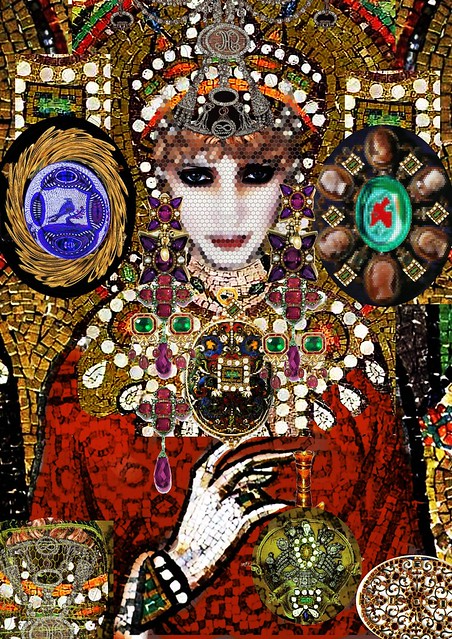
D&G Mosaic Women vs. Theodora's Court

Year 2013, Milan, Dolce & Gabbana "Tailored mosaic" collection
 
Year 547, Ravenna - Theodora and her court, Byzantium

Is it maybe time for a film on Theodora, Empress of Byzantium? Screenwriters, writers, ghost-writers, producers, directors: Get right on it.

Sunday, February 24, 2013

MOSAIC IS KING! They finaly did it. I was expecting this would happen one day soon and it did! See this video and you will know what I mean.


First it was a flame, pretty intense one, sparked by Chanel with the Byzance Collection and now there's a FIRE burning out there for MOSAIC and I'm feeling, in a silly and childish way, even though Chanel or D&C don't know this blog exists, part of this "mosaic" fashion trend.

Just think that only yesterday I decided to go back to my old golden mosaic background. That had nothing to do with the D&C mosaic collection. I just wanted to go back to the basic and neutral background because it provides the best setting of what Mosaicology has been about. I don't now about the near future.

I'm not 100% sure about how much gold I will be showing you but a little voice is telling me there's some posh mosaic coming up soon.

video via Diary of a Clotheshorse

Friday, April 13, 2012

The Epitaphios of Great Friday: Mosaic of Flowers for the Grave of Christ and Hymns of Immaculate Beauty


(My thanks to a friend for helping me with this post - I am not good at this)

The Greek Orthodox Church is blessed for its role in preserving traditions and customs of both an internal and external beauty - how can one not be associated with the other; in this post I want to illustrate the custom of decorating Christ's tomb with flowers, a tradition that's considered a "jewel" for Greek Orthodoxy. I am talking about the Epitaph (epi επί + taphos τάφος = over + grave), a mosaic of flowers which often, as in the photo above, becomes an art masterpiece.

The Epitaphios is decorated during the early hours of Holy Friday by groups of women that work painstakingly and tirelessly while staying with Christ after his death and his Passion on the Cross.

The devotees will gather at church in the evening of Holy Friday to venerate, honour and pray at Christ's tomb. They will chant some of the most remarkable and too beautiful to describe hymns of the Greek Byzantine repertoire. Hymns of sorrow but also of great hope and devoutness. Those are still moments of grief but the beauty of the chanting and of the fresh flowers are the epitome of the long wait for the resolution to the Passion. The Epitaphios along with the Engomia (chants) of Holy Friday is an illustration of the life inside the grave. Yes, life inside the Grave. Not death inside the Grave.

The hymn "Life in the Grave" (Η Ζωή εν Τάφω - I Zoi en Tafo) is an example of that transition between life and death, sorrow and joy. Listening to this hymn you cannot differentiate sadness from joy. It has mixed feelings, mixed meanings. It's a mosaic of contents and of worlds.

The BEAUTIFUL and MOVING hymn "LIFE IN THE GRAVE" and THE EPITAPHIOS PROCESSION.


Women decorating the Epitaphios

Tuesday, December 20, 2011

Learning mosaic the flexible way (lime putty)


As mentioned in the first “limestone”  post "The "limestone" island", limestone is associated with mosaic art. It is actually crucial. In this post I am drawing from my own personal experience to show that by employing it in your mosaic making routine you can learn to make better mosaics.

In the picture above, you can see a mosaic artist making a mosaic on a lime putty mortar which acts as a temporary base. This method is known as the double reverse method. This is the method that I have learned in Ravenna and the one I prefer. 

Lime putty is achieved with the combination of lime chalk or limestone fragments and water and its known roles are as a binding agent, a covering coat on a structure, or as one component in the creation of walkways or mosaics.

The double reverse method is extremely time-consuming and requires that the mosaic artists gets involved with products that only architects/constructors/builders get to work with. However, it should not fail you.

The DR (double reverse) method means that you get to work on your mosaic directly, that is, "what you see/make is exactly what you get". Your mosaic is not supposed to be turned around, like we do with the indirect method where pieces are adhered onto paper/fabric the wrong side up and then turned around and transferred onto the final base (wall, table, floor etc)

The DR method involves making your mosaic on a lime putty mortar which will then be removed once it has dried. The mosaic is turned around, the mosaic gets cleaned from the lime putty and after going through the final stages, the mosaic is secured in in its final place.

When each tessera (the "official" term for "mosaic tile" deriving from Greek τέσσερα meaning four/four angles/square) is placed into the lime putty you get the feeling of something "living and breathing", that feeling that was probably experienced by mosaicists in the past when they embellished church vaults with golden tesserae which they arranged mathematically and gracefully in such angles into the mortar in order to achieve reflections of light, i.e. glory.

And it's not just for the "experience" of that old feeling. The past is long gone and mosaics made that exact way are rare today. What's more important, at least to me, is that this method provides a combination of the following two benefits.

1. It gives you the opportunity to learn and/or practice mosaic making the flexible way

The DR method is about TIME and FLEXIBILITY both imperative for a beginner who is bound to make mistakes and who needs to "see" the work and how the tessera interact with each other according to how they are placed on the lime putty mixture. The lime putty mortar is temporary and flexible and tesserae can be removed hours and days after. Even in the absence of a teacher, the learner, takes up the role of the "judge" and as he or she can re-examine the work.
How many times have we found ourselves saying "this is as far as I can go" and "this is the best I can do" and then the next day we contradict our own judgement and want to change everything. The DR method is as flexible as it can get and it will help you work "miracles".

2. It provides you with a unique method to learn from ancient mosaics.

With the DR method, the design of the mosaic you are about to make is copied onto the lime putty mortar. This means that ancient mosaics can be reproduced piece by piece as long as you know how to follow some simple guidelines which all schools (at least, as far as I know, in Ravenna) will teach you.

To my humble view, a student of mosaic should first learn how to copy mosaics. Especially ancient ones because all the fundamentals of mosaic art are to be found there. Andamento. Shapes. Contours. Colour balance. You can deviate from tradition once you have learned it. I would never recommend someone starting from crushed pottery or vitreous glass mosaics working on a mosaic pattern/design that has not been already made.

If you notice the work of modern Ravenna artists, you will see that they have gained from learning from ancient mosaics. Roman and Byzantine.

If the past cannot teach the present and the father cannot teach the son, then history need not have bothered to go on, and the world has wasted a great deal of time.  ~Russell Hoban

I will continue exploring the "limestone" theme in the next post. The image links back to its source. If you want to use this text please kindly indicate the source.

(not me in the pic - image credit: hotelsravenna.it) 

Friday, November 4, 2011

NY Times special report on mosaic art


RAVENNA, ITALY — Mosaic is one of the oldest of the decorative arts and developed into one of the most spectacular. From humble beginnings in such forms as pebbles pressed in patterns into beaten earth floors, at its high points during Hellenistic, Roman and Byzantine times mosaic became a sophisticated fine art in itself. 

Read the whole article here


PS. Mosaicology is now on Twitter..I guess I will be twitting a lot more often than blogging at the moment..... Click on the T button to follow me!

Wednesday, August 31, 2011

Cool

The temperature in my little corner here in North Italy has finally dropped and I am feeling slightly "cooler". This lovely dove (detail from Ravenna, in specific Galla Placidia Mausoleum) brings the right breeze τo the last day of summer, 31 august.

Thursday, June 30, 2011

The (Byzantine) Dream


Have I died and gone to heaven?


I just can't believe what I see! Mosaic tiles on a dress !


The glamour and sophistication of this outfit is more than a dream!


And the collection includes shoes ! I wonder if they are close to what the real shoes in Byzantium looked like. To what Anna Comnena or Empress Irene or Theodora wore.


Of course !


Pinch me. I am still dreaming.


If the devil wears Prada, the heavens wear Byzance Chanel Collection.


Follow your dreams.

Set your goals according to your heart's desire
and forget about how sensible it may or may not sound.
There has to be a way to do it
feel, think, act


Do not ever "let the past bury its dead"...you know what I mean!


What was the source of inspiration for Chanel Byzance Collection ?
View my previous post here and listen to Karl Lagerfeld's interview.
View more chanel on their website here
A detailed British historical documentary on the Byzantines from youtube here

Saturday, May 28, 2011

A tribute to Constantinople


A little design I made as a tribute to the city without which, amongst other things, the world of mosaic would not have been as we know it today.

Have a great weekend!

Thursday, May 19, 2011

Larnaca, city of planes and mosaic angels


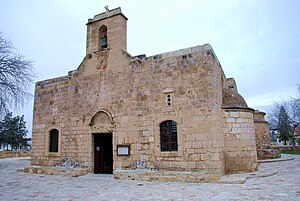
Larnaca, a city by sea in Cyprus where the airport is situated offers some wonderful and thrilling moments for especially those with children when you know that if you raise your head while sunbathing you will see the plane that close you think you can touch it! This is what happened to me last year (or was it 2 years ago, need to check when the pictures where taken) and I took the camera to take some shots of the event. I kept them in a file and accidentally retrieved them a couple days ago! I decide to post them along with some glorious mosaics that you can find in Larnaca. Cool right? I am talking about the byzantine mosaics of Kiti (Larnaca district) dated 11th century in a lovely church called Panagia Angeloktisti (our lady, Mother of God, built by the angels)

The main part of Panagia Aggeloktistos which means “Our Lady built by the angels”


scenic church exterior
church exterior from another angle

the promenade in Larnaca, see the palm trees, the place is dubbed "foinikoudes" (palm trees)...(I love this place!!!)

Larnaca airport (city is small, you come out the airport the sightseeing begins!)
Larnaca marina

Now, the pictures I promised from my archives. The post's top picture with the plane was also taken that day.


This beach is called Mackenzie, there are lovely restaurants flanking the beach and it is ideal for families. You can spend the entire day there, having drinks, then lunch, coffee, dinner.

A map is always useful.

Larnaca map
More info on visitcyprus and larnaca.com.

PS: 37% of the island of Cyprus is under Turkish occupation since 1974.

Saturday, May 7, 2011

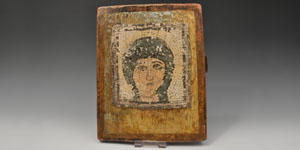
Byzantine micromosaic icon on auction

via
Breathtaking! And as always...I "stumbled" on this rare mosaic icon while looking for facts and images for another long post....which I hope to be able to post quite soon.

Description (timeline auctions text):

Circa 6-10th century AD. A ceramic mosaic icon mounted on a 17th-18th century AD Russian icon; the mosaic created with black and purple rectangular border depicting a female face in a green headdress on a cream background; the block with red pigmentation and gilded surround; sliding bar to rear.

To take a closer look and find out more about this exquisite work of art you should go to timelineauctions.com.

If you intend to purchase it, please let me know. Really.

Sunday, April 17, 2011

A sublime Ravenna mosaic


My words would be too poor to explain or convey the message of holy images. I will limit myself to say that the above mosaic detail (which utterly caught me by surprise as I have just discovered it now) comes from Ravenna, in particular San Apollinare in Classe ", Byzantine Church, dated ca. 549.

Not only this image is superb and sublime, it is also a remarkable demonstration of the outstanding, sophisticated and wise use of colour. Brown/gold with blue...isn't this one of those combinations that are still "trendy" today?

Happy Easter everybody!

Tuesday, April 12, 2011

A rather mischievous Theodora by Lacroix for SICIS


I am still not sure if I like this (Theodora's subtle and feminine look is gone and been substituted by a less sophisticated yet rather mischievous appearance of a modern lady) but it is definitely worth of mention.

The artwork in question is based on the famous San Vitale mosaic of Theodora previously featured on this blog here and here. It is the offspring of the collaboration between Cristian Lacroix and SICIS. The famous Italian company SICIS (remember the mosaic bathtubs and the pin up girl?) is a name to remember in the world of mosaic and furniture today and if any of you will want to exploit mosaic and interior design be sure that the name will pop up repeatedly. SICIS as we speak will be exhibiting Lacroix's collection at the Salone del Mobile in Milan.

Here we quote some interesting information on this collaboration of which the full text is found on www.anothermag.com, here.

quote
True, all the pieces illustrate SICIS’s commitment to esteemed creative endeavor and continued savoir faire. In partnership with Mr. Christian Lacroix masterful hands, they revolutionize the world of lifestyle with poetic insouciance. Mr. Christian Lacroix also acknowledges that, thanks
to SICIS’s daring and energy, the mosaic is now accepted as a deeply contemporary and artistic embellishment. Wildly inspired by the illustrious history of mosaics in Ravenna particularly in connection with the Byzantine Empress Theodora, Mr Lacroix was reminded of Arles, his hometown and romantic region renowned for well-preserved Roman tiles and sought after antiquities.

quote

In fact, as we read from the same source that from April 12 - 17, the collection of furniture designed by Mr Christian Lacroix will be presented at the Salone del Mobile Milan fair in a new exquisite SICIS lifestyle set-up. From June 2011, it will be distributed worldwide in all of SICIS’s showrooms.


Monday, April 4, 2011

Byzantine mosaic card


This is one of the things I have been working on since my last post. I have also been very busy with some charity work and I have finally been able to sit down and take some pictures of my first card. It is composed of mosaics from Constantinople and Thessaloniki and what they have in common (besides being of religious character) is the different tones of gold and blue that blend so fine. The inside of the card is blank. I have also framed the card to see how it looked like as a picture.