Showing posts with label ancient mosaics. Show all posts

Tuesday, February 2, 2016

Mosaicology shop updates

This is to update and thank all the people who recently bought items from the shop at Cafepress and who continue to read the blog (we are also thrilled to see that people keep visiting the blog even when we go into "hiatus" mode). The good news is that the shop is constantly improving to deliver better designs and products for mosaic and mosaicology customers and followers!

Muse Thalia, new mosaic print


There's a new mosaic print on selected jewelry items. It's Thalia, the muse of comedy and pastoral poetry. Show your sophisticated style by wearing this lovely pic of soft hues.


"Keep calm and put the pieces together" quote's new improved version


The "Keep calm and put the pieces together" design has been improved. It has been enlarged and looks more vibrant and stylish. Same with the other "Keep calm and mosaic on" quotes in pink, blue and green. Please note that all images are at 300dpi high resolution.

Mosaicology is currently working on a new "surprise" design (no quotes) due Spring.

Take care.

M.

Sunday, October 12, 2014

Details about the new mosaic discovery in Amphipolis


Archeologists uncovered an astonishing mosaic showing a chariot in movement, drawn by a bearded man and god Hermes, the soul bearer (psychopomp). It was discovered in Kasta Tomb of ancient Amphipolis.

The mosaic is made of small pebbles of white, black, greyish, blue, red and yellow colour. The mosaic is of an excellent craftsmanship and particular attention has been given to the rendition of details.

I am sure that those of you who love pebble mosaics have made the connection with the Hellenistic pebble mosaics of Pella and Eretria in Greece.

As I have been able to find on Greek sites, specialists have affirmed that this mosaic proves how unique this tomb is and it testifies the high status of the person buried there. It's also telling us that it’s dated to the last quarter of the 4th century.

A few details now about the mosaic:

The bearded man pulling the chariot is wearing a laurel wreath, whereas Hermes who stands in front of him is wearing a petasus, a chiton, winged sandals and in his hand he is holding a caduceus.

Archaeologists think that in view of the fact that Hermes appears as a soul-bearer, it's possible that the man buried in the tomb is a man. Many people say it's Alexander the Great...

The mosaic floor hasn't been uncovered in its entirety since its eastern and western part are still being excavated. The mosaic has of course suffered deterioration in the form of a circle in its centre. As it has been announced to the Greek Press, the mosaic will be put together and restored so that the whole picture of the composition can emerge in the best possible way.

Best wishes to everyone in Greece taking part in this project!

Image credit: Amfipolinews.blogspot

Friday, September 19, 2014

The Mosaics of Thessaloniki, Greece (Guest post by Helen Miles)

Just a sample of the perfection and the sublimity
of the mosaics of Thessaloniki

Hallo everyone, It's been a while....

I hope you are all well, keeping calm and mosaicing on!

This post is special. It was written by the wonderful Helen Miles, a mosaic artist whom I deeply admire. Her blog is the perfect place for those who want to find out more about Greek mosaics not just from a theoretical point of view but also as far as the more technical aspects of mosaic making is concerned. I am personally inspired by this woman and I think you will too.

Oh and don't forget. If any of you wish to guest post here all you need to do is get in touch with me.

 M.

 *** 

 The Mosaics of Thessaloniki, Greece (by Helen Miles)

Istanbul, Ravenna, Gazientep, Rome, Aquilea, and Madaba are among some of the world’s great mosaic sites with collections which receive considerable recognition and streams of visitors. But hidden away in Thessaloniki, in Northern Greece, on walls, ceilings and floors, in museums and churches, are mosaics which deserve their own share of the international limelight.

A bustling port city in a crescent-shaped bay lined with neo-classical apartment buildings, Thessaloniki is the epitome of a smart modern metropolis, making it hard to conceive that it was once a crucial centre of the Eastern Roman empire and played a pivotal role during the Byzantine era as the second most important city after Constantinople.

Yet for those prepared to delve a little deeper, Thessaloniki’s mosaics which span from the 4th to the 14th centuries, tell the tale of the city’s earlier lives; of it’s grandeur and importance, of it’s trade links, military might, and strategic position as well as serving as the artistic expression of a former glory which can still be traced in its Roman ruins, Byzantine churches and museum displays. For the mosaic lover, there is plenty to keep you busy exploring the back-street churches (Thessaloniki is a World Heritage Site for its Byzantine monuments), taking time in the two main museums and peering over the outer walls of the Galerian palace in the city centre to check to see if you are lucky enough to be there at the time when the mosaics are exposed.

The mosaics of Thessaloniki are to be found in its scattered Byzantine churches, down back streets and set back from the boulevards, but their quieter, less dramatic beauty doesn’t mean that they are any the less worth seeing. Quite the contrary.

The only drawback is that you need to get an early start and be patient. The opening hours of the churches are often eccentric and usually close by 2pm so don’t be too disappointed if some you don’t find all of them open. The ones not to miss include the beautiful glass, gold and silver ceilings in the 4th century Rotunda, a soaring vault-like brick structure which was built as a mausoleum, converted into a church, and served time as a mosque. The intricate ceiling mosaic of saints and architectural facades is undergoing restoration and covered in scaffolding, but in the side recesses you can see birds and fruit set within geometric and twisting bands of tesserae.

The Rotunda mosaics are among the earliest mosaics in Thessaloniki but there are plenty more from other periods in the Byzantine era. There is the Church of Agia Sophia which has an exquisite mosaic dome dating from the 9th century showing the apostles surrounding an image of Christ ascending to heaven as well as other mosaics of Biblical themes. The Church of the Holy Apostles, once part of a monastery complex, has exceptionally fine mosaics which are compared to those of the Chora in Istanbul. Or there is the Church of the Acheiropiitos which has beautiful 5th century mosaics of garlands and urns interspersed with birds and fruit decorating the underside of the arches along the main aisle. Try not to miss the Church of Osios David, an unobtrusive 5th century building, which was probably originally a bath house. Over the alter, it has a mosaic of Christ ascending into heaven with fish bobbing along in the rivers of paradise at his feet and animals representing the four apostles in the corners, including a lion for Saint Mark with an uncanny resemblance to a Maurice Sendak wild thing.

The Church of St. Dimitrios, Thessaloniki’s patron saint, was largely destroyed by a fire which devastated large portions of the city in 1917, but some interesting mosaic panels have been preserved showing the saint with various city officials and one with two solemn children, tucked shyly in next to his robes. The city’s two museums, the Museum of Byzantine Culture and the Archaeological Museum of Thessaloniki, conveniently next door to each other, also have plenty of mosaics in their collections which are well worth seeing ranging from floor mosaics featuring animals and plants from a destroyed 4th century church to mythological scenes taken from domestic buildings.

If your passion for mosaics is still not sated, then it’s worth making a trip out to Pella, which is a 1.5 hour drive from Thessaloniki. Pella, with its world famous pebble mosaics, is the birth place of Alexander the Great and the scenes depicted in these unusually intricate and delicate mosaics – the oldest of their kind – range from lion hunting scenes to one of a young Alexander riding on the back of a leopard.

 *** 

Thank you Helen!

Sunday, November 17, 2013

Cobblestone streets from around the world - BUCHAREST


Cobblestreet n.2 is from Romania. What draws me to this cobbled street from Bucharest is the irregularity of the stones and the way they let the light reflect on them. It really looks as if this was taken as far as the year 1700.

image credit here

Mosaicology Blog
Contact Facebook  -  Books  -  Shop  -  Advertise

Tuesday, November 12, 2013

Cobblestone streets from around the world - PRAGUE

 via

There's something majestic and artistic about cobblestone streets. I see them all too often here in Italy but this type of street paving is encountered around the world and it goes back thousands of years ago. This is - again - one of those posts that have just popped up in seconds.

So, I said to myself why not do a series of posts with cobblestone streets from around the world? Simple, short and inspiring.

Cobblestone streets it is then! The ones we love to walk on. Perhaps our high heeled shoes don't love them that much but anything cobble and stone for a  mosaic artist is a feast. Stay tuned!

A presto!

Magda

Mosaicology Blog
Contact  -  Facebook  -  Books  -  Shop  -  Advertise

Thursday, October 31, 2013

LATEST NEWS: 1700 year old #mosaic is discovered in Turkey

A mosaic has been accidentally discovered in Turkey. The mosaic shows a woman who personifies ΚΤΙCΙC  (the inscription is in Greek and it means "creation/construction").
 
Find out more about this on WORD BULLETIN.

Magda


Mosaicology Blog
Contact  -  Facebook  -  Books  -  Shop  -  Advertise

Tuesday, October 29, 2013

Sabratha, Morgantina, Delos: Musing on the transition from stones to tesserae in #mosaic art


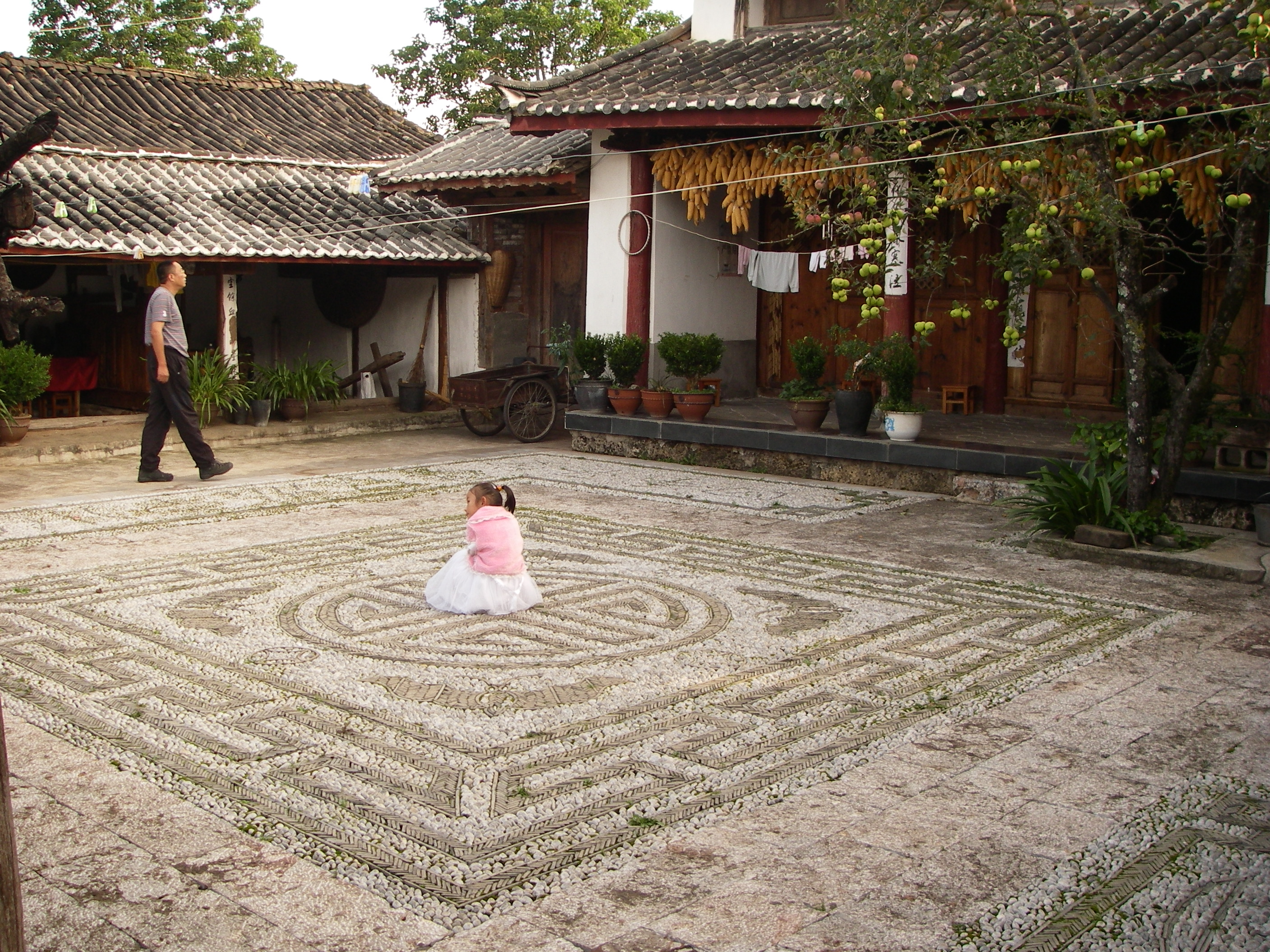
A pensive girl
Pebble mosaic floor in an old guest-house in Li Jiang, Yunnan, PRC (China)
image credit


Basically a writing challenge

I know it's dangerous to delve into an area intended for experts, historians and professional writers but I need to find answers. I also need to write so here I am giving myself a ...writing challenge about a historical phase in mosaic art that I want to understand.

A couple of weeks ago, while going through some of the things I write for the blog, something new emerged. The transition from pebbles or uncut stones into tesserae for mosaic construction.

I realised that in the The essential visual guide to mosaic post that I had published when I started this blog in 2010 there was no mention of that phase or the transition. This means I must rewrite it...

Anyway. I was VERY lucky to come across the mosaic from Sabratha and voilà...a new post and a challenging topic to investigate.

And so I began googling and reading a variety of articles and personal blogs. But more than anything this was a writing challenge. You see, writing reveals things to me. I saw that happening. So, I'm sticking to it.
 
Of course, what I write here is my own opinion and is subject to confirmation from the experts. As far as the dates ascribed to the mosaics are concerned, I have provided the dates that I have found from the various sources and which I have double checked.

One thing is almost certain. Tessellated mosaics (mosaics using tiles, stones that have been cut and not used in their original state) are considered to have appeared at some point in the 3rd century BC.

Now, will you join me on a journey to Libya, Sicily and Greece to muse over some truly intriguing mosaics?

First stop. Sabratha, Libya.

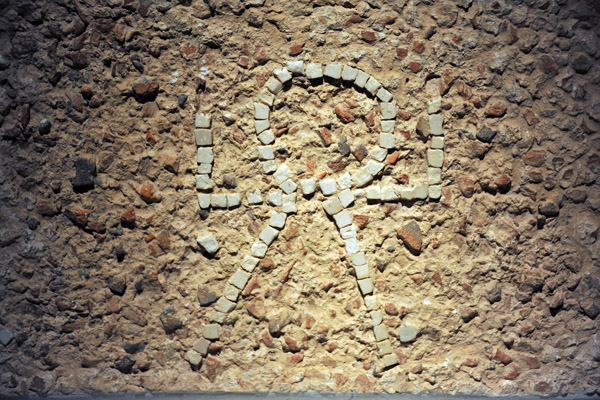
Fragment of floor in opus signinum with the sign of Tanit, 3rd-1st C. BC, Sabratha
Images Copyright Brian J. McMorrow 1999-2012 - image credit


When I stumbled upon this photo from Sabratha, I was in awe.

Sabratha in Libya was a Phoenician trading-post that served as an outlet for the products of the African hinterland and it enjoyed prosperity during the 3rd and 2nd century BC.

According to what I have found on the internet, Sabratha boasts both Hellenistic and Byzantine period mosaics. In the museum of Sabratha, there are some amazing mosaics in exhibit. The most important mosaics come from a Basilica from the time of Justinian.

The above mosaic from Sabatha clearly shows the use of tesserae even if only a little figured was mosaiced (or seems to have been mosaiced). Since I am not aware of what the original mosaic looked like or if this is what it actually looked like more or less, I will just make some observations based on what I see.

The technique of the little man mosaic in Sabratha is called opus signinum which is a kind of pavement used in Roman times that was made with broken tiles mixed with mortar. Floors made this way were common in Hellenistic Sicily.

What's fascinating in this picture is that we have a mix of opus signinum and opus tessellatum (mosaic using tesserae as we know it today). Two in one!

However, in Sabratha, a city that had ties with Rome (similar mosaics have been found in Ostia), the mosaics are clearly in a tessellated form as this picture here below demonstrates. This is from the Roman baths and it should be from the 2nd century.
 .


Now, let's go to Italy for another mosaic "mix".


Next stop. Morgantina in Sicily.


Mosaic floor 3rd century Hellenistic Morgantina (Sicily) Magna Grecia
Copyright viaggiscoop.it


In the above mosaic from Morgantina, we see both uncut stones and tesserae into one single mosaic.

The mosaic floors in Morgantina are considered to be among the first examples of mosaics using tesserae in Magna Grecia. From the information I could gather, they are dated 3rd century BC (2nd half of 3rd century).

Look at the background surrounding this mosaic. It's decorated in random order with stones that are not completely square. Most of them are square enough but the way they were juxtaposed is not a sign of a flourished mosaic style that we would observe in other mosaic floors throughout the same period.

I doubt if this mosaic blending random stones and tesserae would occur at a later period (from the 3rd century that marked the shift into tessellated mosaics). 

Here's a tessellated mosaic from the House of Ganimedes in Morgantina, made with tesserae, unlike the one before which is apparently an exception according to what I have been able to find on the internet.


Ganimedes mosaic from Morgantina
image credit


Last stop. Delos, Greece.

This last mosaic must be the most unpredictable! This is from Delos island. The mosaics on this special mosaic island in Greece date from the 2nd century BC. The mosaics are in tessellated style.

But this mosaic here tells another story, a non-tessellated story.


 Mosaic floor from Delos
(I have not been able to discover its date but the mosaics in Delos are dated 2nd-1st century BC)
image credit


But before showing some "real" (tessellated) mosaics from Delos, here are two vivid examples of "mosaic mixed technique" from Delos.

The transition is evident here, right?


#1 Mosaic floor in a "mixed" fashion from Delos island
image credit


#2 Mosaic floor in a "mixed" fashion from Delos island

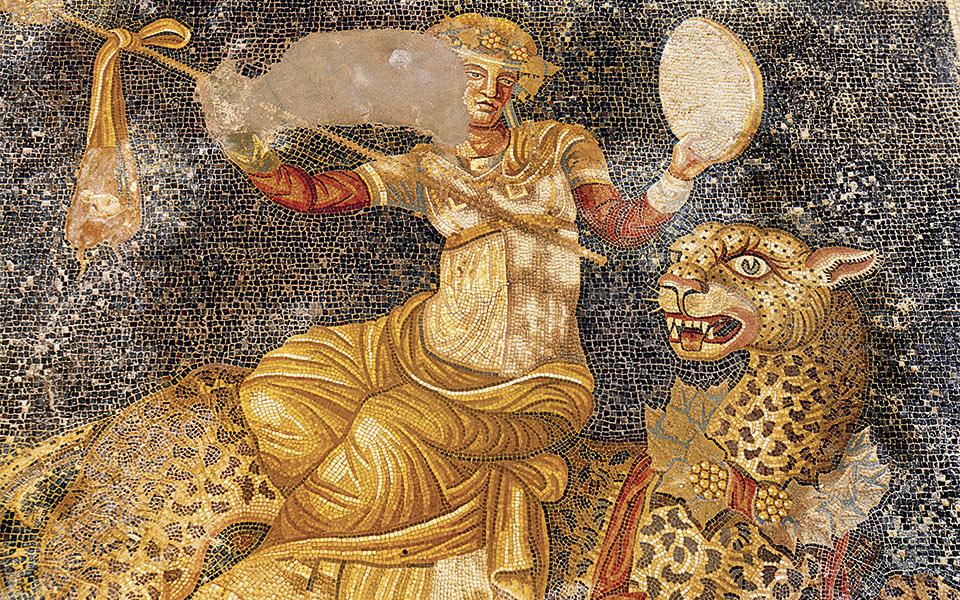
One of the most famous mosaics from Delos is the one featuring Dionysus riding a panther from the House of the Masks which is dated ca 120 - 80 BC. The building may have served as a hostel for actors, hence, its name.


Mosaic floor depicting Dionysus seated on a panther, from the House of the Masks, Delos.

Another mosaic now part of the Archaeological Museum on the inhabited island of Delos is this one here. King Lycurgus of Thrace killing Ambrosia, which is changed into a grapevine. Clearly and absolutely tessellated.

I find this mosaic absolutely remarkable for two reasons.

Firstly, its technique is perfect considering that it was made end of 2nd century BC and that it measures 69 x 73 cm. Try to zoom in and you will see what I mean.

Secondly, its dark background is testimony to a refined and more sophisticated mosaic making technique - as early as the end of the 2nd century BC - that looks at the human form rather than patterns. It brings to mind the frescoes from Pompeii and of course the pebble mosaics in Pella from the 4th century BC.


 King Lycurgus of Thrace killing Ambrosia, which is changed into a grapevine.
Greek mosaic from Delos, end of 2nd century BC, 69 x 73 cm. Archaeological Museum of Delos
From wikipedia image credit


Judging from these three mosaics that speak their own language - actually I'd say they are bilingual - someone would agree that indeed the transition did occur somewhere in the 3rd century BC.

Of course you didn't need me to say that. All the books say that. But seeing how the two styles overlap is something else and I hope that I have achieved in sharing the excitement regarding the transition from pebbles to tesserae excitement with you all!

As I said in the beginning of this post, this was more of a writing challenge (on mosaic art) than anything else so please forgive me if I have said something stupid or unfounded.

You see, mosaic art is VERY challenging not just in its making but also as a subject to study. The more you read about the history of mosaics, the more new information you will be inundated with.

A presto!

Magda


  Mosaicology Blog
Contact  -  Facebook  -  Books  -  Shop  -  Advertise

Friday, August 23, 2013

The butterfly of the Aegean, #Greece

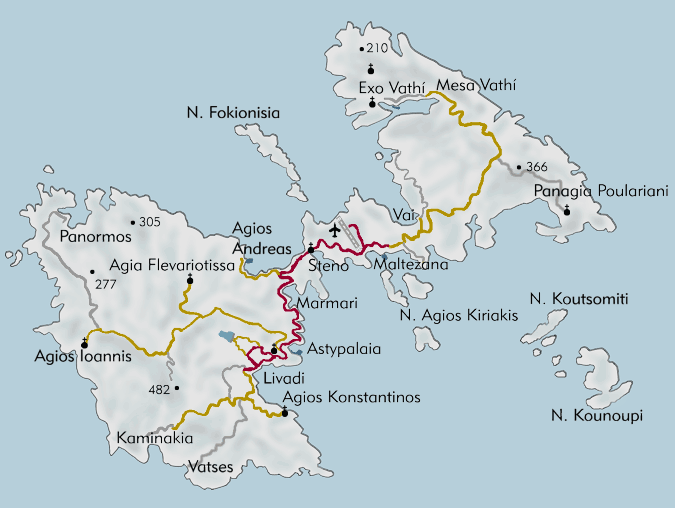
Astypalea (Αστυπάλαια)
I haven't written any mosaic travel posts in a while. I'm glad that due to an incident, of which details I hardly recall, I stumbled on a late-Roman impressive floor mosaic situated on the island that's known as "the butterfly of the Aegean". Astypalea in Greece.

But. I have just realised that in one week from now Summer will be officially over and this post is still sitting in my drafts!! I better do something!

So, little butterfly island won't you open your wings for me, fly and press Publish. Please!


Astypalea is not exactly famous among the international crowd. Most of the tourists that go there are from mainland Greece.

The reason why it's been dubbed as "the butterfly of the Aegean" is due to its butterfly shape!


This blue gem of the Dodecanese seems to be a very ancient island. According to Wikipedia, its first inhabitants, the Dorians, apparently named the island after "asty" (city) and "palea" (old) which could justify the long history of the island.

I quote from dodekanissaweb.gr
Astypalea has a long history, ranging from the Protocycladic times, to the Golden Age and the Athenian Alliance, to the Roman times, the Byzantine times and lately to the Venetian rule, the Turks and the Italians, where in 1948 it was reunited with the rest of Greece. 


And...the reason for this post is ....

This lovely mosaic floor featuring the Zodiac. It's situated in the Baths of Tallara, late Roman Baths in the Analipsi area on the island. Among other finds of this site, there are two other mosaics depicting the four seasons and Cronus holding the earth.

I really hope for the best as far as far their conservation is concerned and I will try to find more information in the near future. I have done some googling but not much about the mosaics. I think I want to go there. Actually.


Well, that's all!

I hope you enjoyed this little voyage.

Wishing you a great September! A presto!


Image credits: astypaleaholidays.gr, myphotopic.blogspot.it, el.wikipedia.org, 12tetragonika.gr, ethnos.g

Tuesday, July 9, 2013

New ancient mosaic discovery in Zappeion (Athens) in Greece


I have just stumbled upon an article in Greek published on 23 June 2013 about a discovery of an ancient Roman times mosaic floor in Athens. The mosaic has survived in parts and it features various geometrical shapes with vine leaves and other vegetal motifs. It's a small portion of a luxurious villa which apparently belonged to an important ruler.

Article in Greek


Please help me continue sharing the passion for mosaic(ology)
 

Monday, October 22, 2012

Platt Fellow Reflects on Mosaic Discovery - Huqoq mosaic with female face and inscription.

image credit Photo by Jim Haberman.

I thought this was an interesting post to share about a recent mosaic discovery in Israel featured on the American Schools of Oriental Research blog. Read it HERE

Monday, May 21, 2012

NEWS: Bardo museum in Tunis reopens


The Bardo Museum, famous for being home to some of the world's most spectacular ancient mosaics has officially reopened following renovations. Read more here

Tuesday, December 20, 2011

Learning mosaic the flexible way (lime putty)


As mentioned in the first “limestone”  post "The "limestone" island", limestone is associated with mosaic art. It is actually crucial. In this post I am drawing from my own personal experience to show that by employing it in your mosaic making routine you can learn to make better mosaics.

In the picture above, you can see a mosaic artist making a mosaic on a lime putty mortar which acts as a temporary base. This method is known as the double reverse method. This is the method that I have learned in Ravenna and the one I prefer. 

Lime putty is achieved with the combination of lime chalk or limestone fragments and water and its known roles are as a binding agent, a covering coat on a structure, or as one component in the creation of walkways or mosaics.

The double reverse method is extremely time-consuming and requires that the mosaic artists gets involved with products that only architects/constructors/builders get to work with. However, it should not fail you.

The DR (double reverse) method means that you get to work on your mosaic directly, that is, "what you see/make is exactly what you get". Your mosaic is not supposed to be turned around, like we do with the indirect method where pieces are adhered onto paper/fabric the wrong side up and then turned around and transferred onto the final base (wall, table, floor etc)

The DR method involves making your mosaic on a lime putty mortar which will then be removed once it has dried. The mosaic is turned around, the mosaic gets cleaned from the lime putty and after going through the final stages, the mosaic is secured in in its final place.

When each tessera (the "official" term for "mosaic tile" deriving from Greek τέσσερα meaning four/four angles/square) is placed into the lime putty you get the feeling of something "living and breathing", that feeling that was probably experienced by mosaicists in the past when they embellished church vaults with golden tesserae which they arranged mathematically and gracefully in such angles into the mortar in order to achieve reflections of light, i.e. glory.

And it's not just for the "experience" of that old feeling. The past is long gone and mosaics made that exact way are rare today. What's more important, at least to me, is that this method provides a combination of the following two benefits.

1. It gives you the opportunity to learn and/or practice mosaic making the flexible way

The DR method is about TIME and FLEXIBILITY both imperative for a beginner who is bound to make mistakes and who needs to "see" the work and how the tessera interact with each other according to how they are placed on the lime putty mixture. The lime putty mortar is temporary and flexible and tesserae can be removed hours and days after. Even in the absence of a teacher, the learner, takes up the role of the "judge" and as he or she can re-examine the work.
How many times have we found ourselves saying "this is as far as I can go" and "this is the best I can do" and then the next day we contradict our own judgement and want to change everything. The DR method is as flexible as it can get and it will help you work "miracles".

2. It provides you with a unique method to learn from ancient mosaics.

With the DR method, the design of the mosaic you are about to make is copied onto the lime putty mortar. This means that ancient mosaics can be reproduced piece by piece as long as you know how to follow some simple guidelines which all schools (at least, as far as I know, in Ravenna) will teach you.

To my humble view, a student of mosaic should first learn how to copy mosaics. Especially ancient ones because all the fundamentals of mosaic art are to be found there. Andamento. Shapes. Contours. Colour balance. You can deviate from tradition once you have learned it. I would never recommend someone starting from crushed pottery or vitreous glass mosaics working on a mosaic pattern/design that has not been already made.

If you notice the work of modern Ravenna artists, you will see that they have gained from learning from ancient mosaics. Roman and Byzantine.

If the past cannot teach the present and the father cannot teach the son, then history need not have bothered to go on, and the world has wasted a great deal of time.  ~Russell Hoban

I will continue exploring the "limestone" theme in the next post. The image links back to its source. If you want to use this text please kindly indicate the source.

(not me in the pic - image credit: hotelsravenna.it) 

Wednesday, November 16, 2011

Riding the panther (musings inspired by a mosaic from Delos)


The epoch we have found ourselves to live in requires that we have the power to manage each second of our life as if we were machines. We have to "know" but not learn, to take it easy but not muse over, to share with others what lies between our conscious and imposed "is this me-this has to be me" self. An "epoch" (need inverted commas now) which is getting old and consumed before it´s new.

We constantly need to prove we can juggle riding the panther, holding the spear and playing the drum. I am offering no reccomendations here but only a hint of what I feel is right. Learn to be diplomatic and think again. Are you riding in your race or someone else´s? Make sure it´s yours.

mosaic from Delos, Greek island near Santorini, famous for its mosaics, featuring Dionysos

Friday, November 4, 2011

NY Times special report on mosaic art


RAVENNA, ITALY — Mosaic is one of the oldest of the decorative arts and developed into one of the most spectacular. From humble beginnings in such forms as pebbles pressed in patterns into beaten earth floors, at its high points during Hellenistic, Roman and Byzantine times mosaic became a sophisticated fine art in itself. 

Read the whole article here


PS. Mosaicology is now on Twitter..I guess I will be twitting a lot more often than blogging at the moment..... Click on the T button to follow me!

Saturday, October 29, 2011

Mosaic of the Med: Article on Cyprus by James Fryer


At the Mosaics of (Pafos) Paphos, faded, tiled floors became storybooks exposing the passionate tales which inspired Shakespeare’s Romeo and Juliet, reveal the origin of bay leaves and issue warnings about what happened to the world’s first wine drinkers. But reinforcing how the 1974 invasion has impacted upon the island, we also heard how bombings had caused more damage to the mosaics than had been done since their creation in the third century BC.

Read the full article on Cyprus HERE

Sunday, June 26, 2011

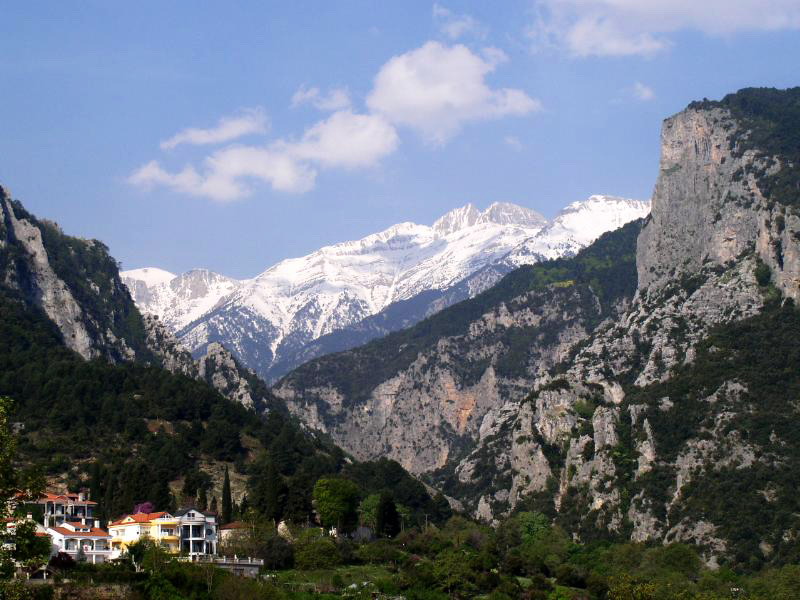
Mt. Olympus, sea of Pieria, mosaics: a heavenly mix


First of all I must thank blogger A Brit Greek for sending me these pictures she took last year. The mosaics illustrated are from ancient Dion in Pieria, Greece. I never got round to posting them until now. Feels like "old times" here in Mosaicology when I first started this blog and was mainly focused on history and places.


Since Dion is close to the sea, let's take a swim in the seas of Pieria! The most notable are Litochoro and Platamonas.


The most prominent attraction of the region however is none other than Olympus mountain.


Information about Dion and its mosaics
http://www.ancientdion.org/

Pieria Hotels and Tourism information
http://www.hotelsline.gr/root/newhotel/mx/m_Pieria_tour.asp
http://www.vacationsingreece.gr:

The driving distance from Dion to main city Thessaloniki is 59 miles / 94 km.


I will end this post with something that made me happy. I stumbled upon a blog of the city council of Dion-Olympos where there was a post on mosaic courses held this summer.

I loved the picture - mosaic making process at its best! and I am sharing it with you!!!

The courses have started on the 10th of June. I recommend my Greek speaking followers to visit the blog http://dionolympos.blogspot.com and the mosaic courses post here.

(Οι Έλληνες αναγνώστες μου μπορούν να επισκεφθούν το ιστολόγιο του δήμου του Δίον-Ολύμπου εδώ όπου θα βρουν πληροφορίες για τα σεμινάρια ψηφιδωτού που δυστυχώς έχουν ξεκινήσει στις 10 Ιουνίου, δεν πειράζει, καλό είναι να γνωρίζουμε ότι υπάρχουν αυτές οι υπέροχες πρωτοβουλίες!)

Wednesday, June 1, 2011

Lace dress by Walid and a black and white mosaic from Villa Adriana

Half Panel Dress by Walid

quoting from couturelab.com: 
 
Walid
’s luxurious adornments incorporate the ornament of 18th century design, textiles and beading. His one of a kind pieces are inspired by his lifelong love for all things historical, combined with a natural desire to travel.

black and white mosaic floor from Villa Adriana
stylised vegetation theme
Villa Adriana or Hadrian's villa

(following text and pictures © September 2003 Jack Tsen-Ta Lee)

Villa Adriana, probably the largest and most sumptuous villa in the Roman Empire, was built by Emperor Hadrian and occupied by him for a short time between 135 CE and his death three years later.  Hadrian was a great traveller and a keen architect, and parts of the villa were inspired by buildings he had seen around the world.
The Caserma dei vigili (Guards' Barracks).
Each of the rooms had elaborate mosaic floors.

The soothing pool of the Pecile, which was a reproduction of
a building in Athens.


The Canopo (Canopus), a copy of the sanctuary of Serapis near Alexandria in Egypt.