Friday, November 29, 2013

Authentic and trendy #mosaic jewelery by Simona Canino


Some time ago on this blog, I featured an interview with Simona Canino, an Italian mosaic artist and graduate from Spilimbergo Mosaic School. It was such great news to hear about her Etsy store!

Her work is distinguished by an authentic and versatile style. Some of them are trendy and perfect to wear during the day and for all occasions, whilst others - like this superb pair of earrings featured above - can complement a more dressy outfit - especially a black dress - and make a sensational statement.

Oh and....apart from the mosaic decoration of her accessories, Simona also creates her own settings (bezels)!

Brava Simona!

Be sure to check out her shop I MOSAICI DI SIMONA.

Have a good weekend!

Mosaicology Blog
Contact Facebook  -  Books  -  Shop  -  Advertise

Thursday, November 28, 2013

Rihanna's #mosaic bikini version


Have you seen Rihanna wearing this mosaic bikini? Well, if you haven't, I'm telling you it's from 2011. I wonder if she knows about the bikini girls of Piazza Armerina but who cares if she does. Thing is, kudoz to her for choosing faux tiles. You see mosaic NEVER goes OUT of FASHION. Mosaic is posh.

A presto,

Magda

Mosaicology Blog
Contact Facebook  -  Books  -  Shop  -  Advertise

Tuesday, November 26, 2013

Cobblestone streets from around the world - ATHENS


This cobbled pavement, λιθόστρωτο in Greek, is part of the Athenian heritage pertaining to the Filopappos area. I love it for what it represents and for its randomness. I see the Greek soul hidden right there between those spaces wanting to put the pieces closer together.

Image credit

a presto, Magda

Mosaicology Blog
Contact Facebook  -  Books  -  Shop  -  Advertise

Wednesday, November 20, 2013

Cobblestone streets from around the world - NEW YORK


Cobbled street #3.

There's only one city that will turn me into an insomniac... What a wonderful surprise to find this picture here which, guess what, is available to buy from ETSY right here. Great perspective, impact and contrast. It's NEW YORK. Congrats to photographer Brian Tuchalski.

Alla prossima, Magda

Mosaicology Blog
Contact Facebook  -  Books  -  Shop  -  Advertise

Sunday, November 17, 2013

Cobblestone streets from around the world - BUCHAREST


Cobblestreet n.2 is from Romania. What draws me to this cobbled street from Bucharest is the irregularity of the stones and the way they let the light reflect on them. It really looks as if this was taken as far as the year 1700.

image credit here

Mosaicology Blog
Contact Facebook  -  Books  -  Shop  -  Advertise

Tuesday, November 12, 2013

Cobblestone streets from around the world - PRAGUE

 via

There's something majestic and artistic about cobblestone streets. I see them all too often here in Italy but this type of street paving is encountered around the world and it goes back thousands of years ago. This is - again - one of those posts that have just popped up in seconds.

So, I said to myself why not do a series of posts with cobblestone streets from around the world? Simple, short and inspiring.

Cobblestone streets it is then! The ones we love to walk on. Perhaps our high heeled shoes don't love them that much but anything cobble and stone for a  mosaic artist is a feast. Stay tuned!

A presto!

Magda

Mosaicology Blog
Contact  -  Facebook  -  Books  -  Shop  -  Advertise

Monday, November 4, 2013

The #mosaics of a building plunged into oblivion (bad case loving you)

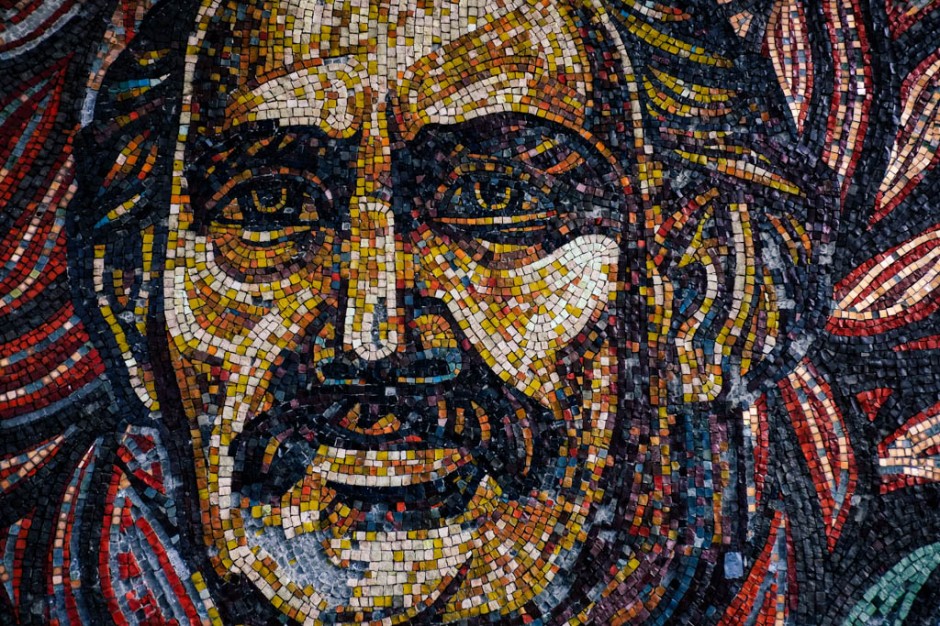
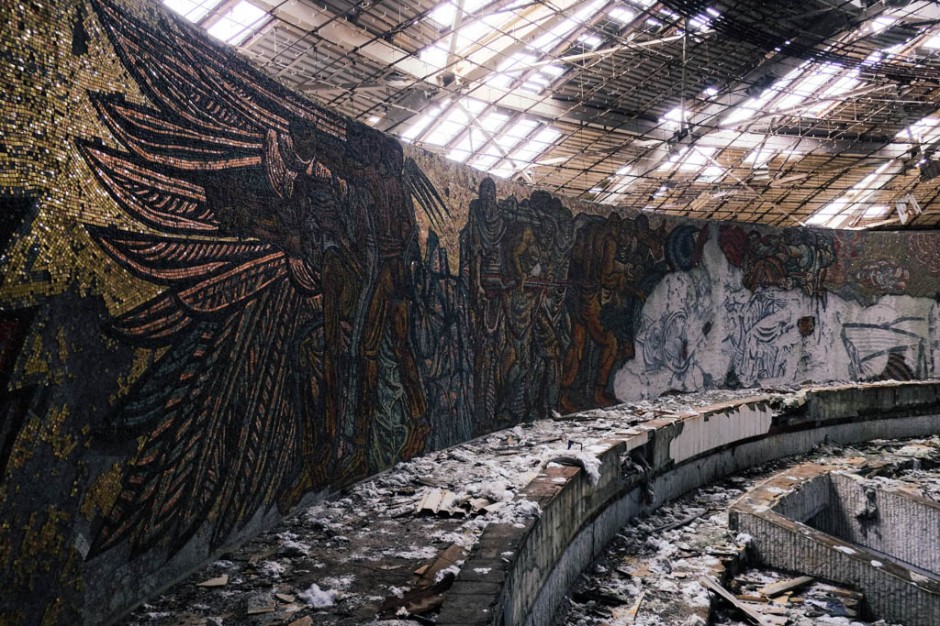
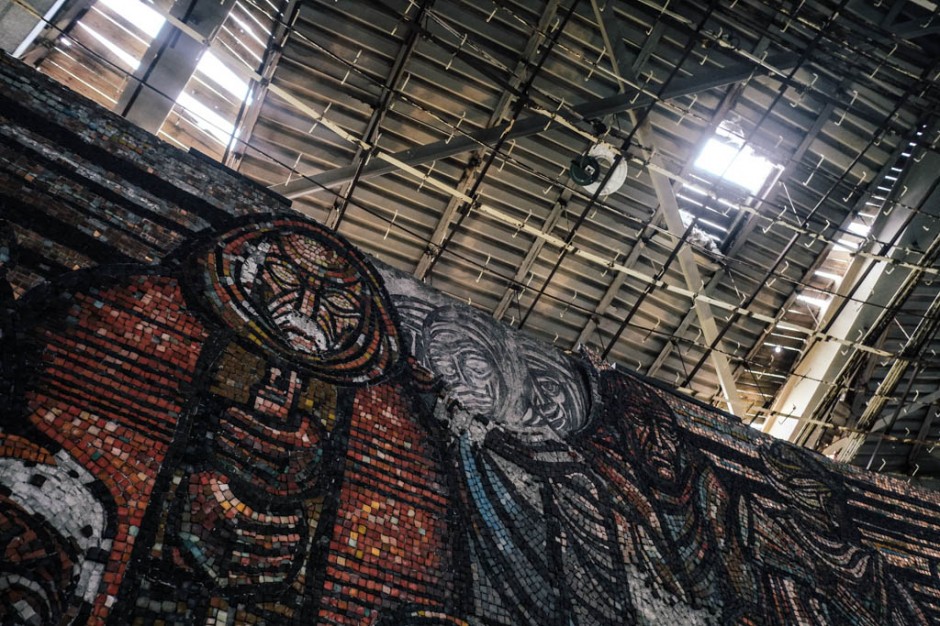
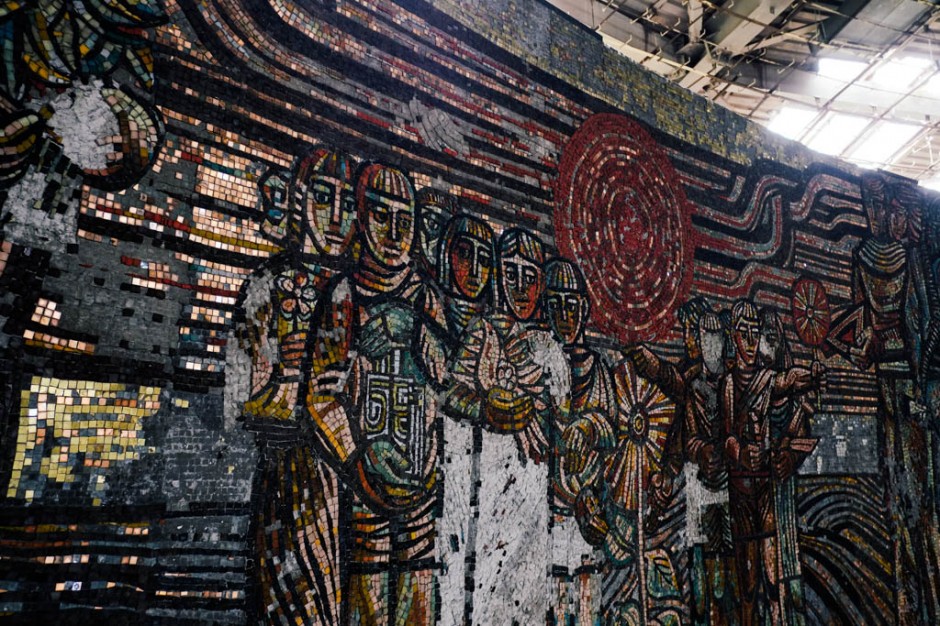
Impressive mosaics of huge dimension in a building
almost everybody forgot about. Almost....


 Yes, this is how bad it is.


  It's beginning to get a bit scary. The perfect setting for a sci-fi movie or The Predator...


Now, this looks better. I fear not.


You are looking at mosaics from an era that's not so far away. For this, and apparently other reasons, it still sort of hangs out there till it hopefully is allocated to where it deserves to be.

(I suppose you know which era this is or do you need a hint?.. Hm, thought not).

These mosaics deserve a warmer and friendlier environment because of the work that has been put into them, for their dimensions, for their association with a past that meant something for some people and their ideology, because of the building which they adorn and the location of that building, for respect, for the future.

For being an impressive a MOSAIC MONUMENT in a beautiful setting in the countryside.

Okay.

I think it's time I told you what on EARTH I am talking about.

This is Buzludha. The former headquarters of the Bulgarian Communist party. An abandoned building that few people visit because it's in a really bad state. Looking at it from the pictures, it truly gives you the impression of ANOTHER ERA. 

As the building is currently plunged into oblivion, the mosaics are slowly decaying and in no time they could indeed be lost unless someone either restores the building and turn it into a museum or at least remove the mosaics and place them into an existing museum.

I'd love to quote for you the words of Timothy Allen of Human Planet.com who wrote about the place in his post Forget the past:
Buzludha is Bulgaria’s largest ideological monument to Communism. Designed by architect Guéorguy Stoilov, more than 6000 workers were involved in its 7 year construction including 20 leading Bulgarian artists who worked for 18 months on the interior decoration. A small, universally expected donation from every citizen in the country formed a large portion of the funds required to build this impressive structure that was finally unveiled in 1981 on what was the 1300th anniversary of the foundation of the Bulgarian state.
Buried in the monument’s concrete structure, is a time capsule containing a message for future generations explaining the significance of the building.
The decor was a sumptuous mixture of marble and glass including a magnificent main hall containing 500sq metres of mosaic fresco depicting Bulgarian and Soviet communist themes.

Timothy Allen also includes pictures of how the building USED TO BE LIKE before being abandoned. This way you can see the mosaics intact.


Sci-fi. Indeed. Star Wars... I'm expecting a Jedi entering the scene.


And this is where Darth Vader is walking fast and furiously.


In his post, Timothy Allen shares an EXTRAORDINARY picture of a REMOVED MOSAIC from the building. The author visited the building on a snowy day.


A sinopia in the snow...


Suggestive, not that scary but who would want to spend Christmas there?
(unless if they turn it into a museum)


The way the building looks on a snowy day


In Allen's post, there's a reader's comment that I wanted to include here because it's relevant to both the building and the MOSAICS. He wrote this in May 2013.

The place has deteriorated a lot since you were there, Tim. Most of the mosaics have gone around the balcony and the roof seems almost see through now. But the view is spectacular as ever. There are a few other monuments to check out in the area too and a beautiful russian church. I’m planning a trip back there with some friends to spend a few days waiting for some descent weather, it looks like people will keep braking into the building if anyone seals it up. All the holes seem to have been made in fairly fresh concrete.

 In total there are 220 comments on Allen's post Forget your Past!

And here's why I called this post BAD CASE LOVING YOU:

While going through the interesting comments on humanplanet.com I discovered that a band named CRCV went there to film a video for their song BAD CASE. Besides the video you can see pictures from the video clip on their Facebook page. This video is amazing! The MOSAICS THAT GLITTER make it pretty mystic and unforgettable.


So, what do you think?

Is it a bad case loving something that nobody wants to know about?

A presto!

Magda


Thanks:
Thank you Plamena Nikolova and Sofia Polykreti for letting me know about the article on Matador Network! This post wouldn't have existed if it wasn't for that tweet!
Image Credits / Copyright:
Matador Network for the information and for the 1st to 4th photo used in this post
Timothy Allen for the information and for the 5th to 9th photo in this post


PLEASE DO NOT COPY OR PUBLISH THIS POST OR A PLAGIARISED VERSION OF IT WITHOUT WRITTEN CONSENT OF ITS AUTHOR. THE SAME GOES FOR THE PHOTOS. PLEASE CONTACT THE PEOPLE MENTIONED HERE ABOVE AND NO MATTER WHAT BE AWARE THAT THESE PHOTOS ARE COPYRIGHTED.


Mosaicology Blog
Contact  -  Facebook  -  Books  -  Shop  -  Advertise

Thursday, October 31, 2013

LATEST NEWS: 1700 year old #mosaic is discovered in Turkey

A mosaic has been accidentally discovered in Turkey. The mosaic shows a woman who personifies ΚΤΙCΙC  (the inscription is in Greek and it means "creation/construction").
 
Find out more about this on WORD BULLETIN.

Magda


Mosaicology Blog
Contact  -  Facebook  -  Books  -  Shop  -  Advertise

Tuesday, October 29, 2013

Sabratha, Morgantina, Delos: Musing on the transition from stones to tesserae in #mosaic art


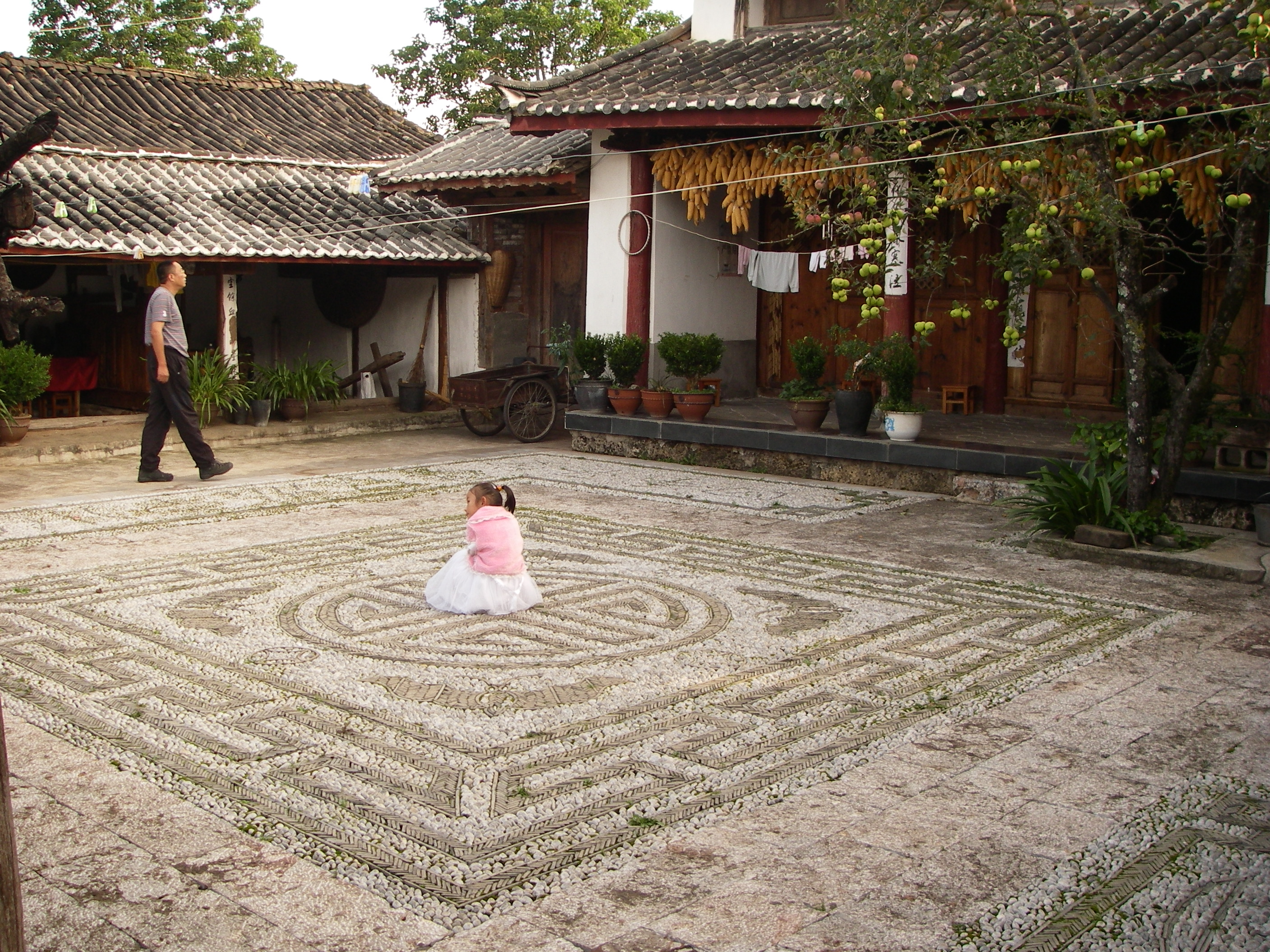
A pensive girl
Pebble mosaic floor in an old guest-house in Li Jiang, Yunnan, PRC (China)
image credit


Basically a writing challenge

I know it's dangerous to delve into an area intended for experts, historians and professional writers but I need to find answers. I also need to write so here I am giving myself a ...writing challenge about a historical phase in mosaic art that I want to understand.

A couple of weeks ago, while going through some of the things I write for the blog, something new emerged. The transition from pebbles or uncut stones into tesserae for mosaic construction.

I realised that in the The essential visual guide to mosaic post that I had published when I started this blog in 2010 there was no mention of that phase or the transition. This means I must rewrite it...

Anyway. I was VERY lucky to come across the mosaic from Sabratha and voilà...a new post and a challenging topic to investigate.

And so I began googling and reading a variety of articles and personal blogs. But more than anything this was a writing challenge. You see, writing reveals things to me. I saw that happening. So, I'm sticking to it.
 
Of course, what I write here is my own opinion and is subject to confirmation from the experts. As far as the dates ascribed to the mosaics are concerned, I have provided the dates that I have found from the various sources and which I have double checked.

One thing is almost certain. Tessellated mosaics (mosaics using tiles, stones that have been cut and not used in their original state) are considered to have appeared at some point in the 3rd century BC.

Now, will you join me on a journey to Libya, Sicily and Greece to muse over some truly intriguing mosaics?

First stop. Sabratha, Libya.

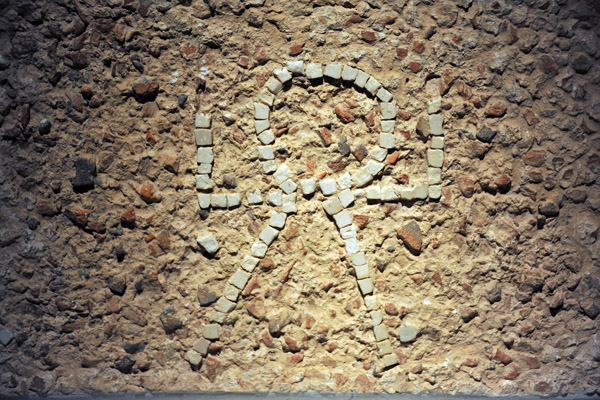
Fragment of floor in opus signinum with the sign of Tanit, 3rd-1st C. BC, Sabratha
Images Copyright Brian J. McMorrow 1999-2012 - image credit


When I stumbled upon this photo from Sabratha, I was in awe.

Sabratha in Libya was a Phoenician trading-post that served as an outlet for the products of the African hinterland and it enjoyed prosperity during the 3rd and 2nd century BC.

According to what I have found on the internet, Sabratha boasts both Hellenistic and Byzantine period mosaics. In the museum of Sabratha, there are some amazing mosaics in exhibit. The most important mosaics come from a Basilica from the time of Justinian.

The above mosaic from Sabatha clearly shows the use of tesserae even if only a little figured was mosaiced (or seems to have been mosaiced). Since I am not aware of what the original mosaic looked like or if this is what it actually looked like more or less, I will just make some observations based on what I see.

The technique of the little man mosaic in Sabratha is called opus signinum which is a kind of pavement used in Roman times that was made with broken tiles mixed with mortar. Floors made this way were common in Hellenistic Sicily.

What's fascinating in this picture is that we have a mix of opus signinum and opus tessellatum (mosaic using tesserae as we know it today). Two in one!

However, in Sabratha, a city that had ties with Rome (similar mosaics have been found in Ostia), the mosaics are clearly in a tessellated form as this picture here below demonstrates. This is from the Roman baths and it should be from the 2nd century.
 .


Now, let's go to Italy for another mosaic "mix".


Next stop. Morgantina in Sicily.


Mosaic floor 3rd century Hellenistic Morgantina (Sicily) Magna Grecia
Copyright viaggiscoop.it


In the above mosaic from Morgantina, we see both uncut stones and tesserae into one single mosaic.

The mosaic floors in Morgantina are considered to be among the first examples of mosaics using tesserae in Magna Grecia. From the information I could gather, they are dated 3rd century BC (2nd half of 3rd century).

Look at the background surrounding this mosaic. It's decorated in random order with stones that are not completely square. Most of them are square enough but the way they were juxtaposed is not a sign of a flourished mosaic style that we would observe in other mosaic floors throughout the same period.

I doubt if this mosaic blending random stones and tesserae would occur at a later period (from the 3rd century that marked the shift into tessellated mosaics). 

Here's a tessellated mosaic from the House of Ganimedes in Morgantina, made with tesserae, unlike the one before which is apparently an exception according to what I have been able to find on the internet.


Ganimedes mosaic from Morgantina
image credit


Last stop. Delos, Greece.

This last mosaic must be the most unpredictable! This is from Delos island. The mosaics on this special mosaic island in Greece date from the 2nd century BC. The mosaics are in tessellated style.

But this mosaic here tells another story, a non-tessellated story.


 Mosaic floor from Delos
(I have not been able to discover its date but the mosaics in Delos are dated 2nd-1st century BC)
image credit


But before showing some "real" (tessellated) mosaics from Delos, here are two vivid examples of "mosaic mixed technique" from Delos.

The transition is evident here, right?


#1 Mosaic floor in a "mixed" fashion from Delos island
image credit


#2 Mosaic floor in a "mixed" fashion from Delos island

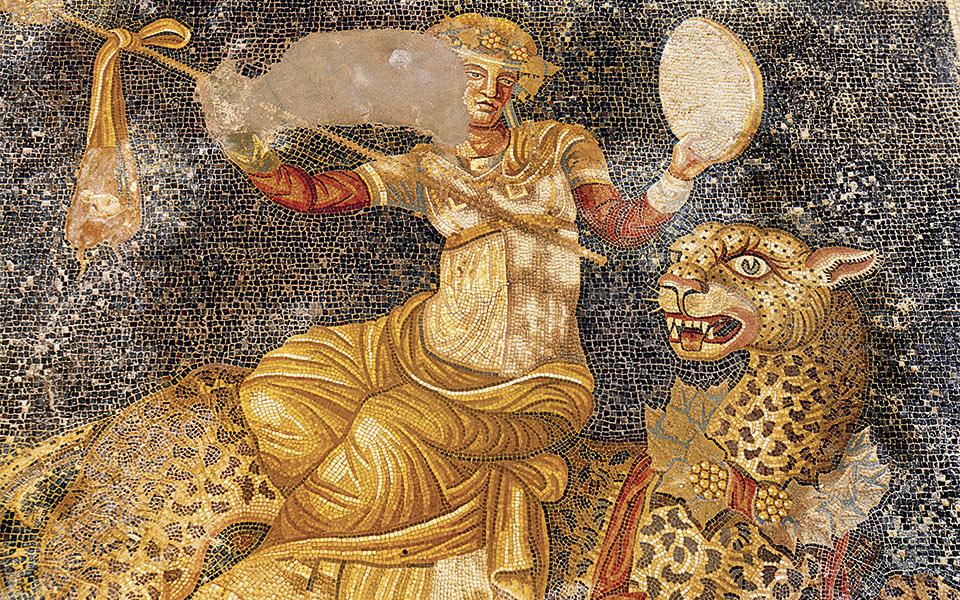
One of the most famous mosaics from Delos is the one featuring Dionysus riding a panther from the House of the Masks which is dated ca 120 - 80 BC. The building may have served as a hostel for actors, hence, its name.


Mosaic floor depicting Dionysus seated on a panther, from the House of the Masks, Delos.

Another mosaic now part of the Archaeological Museum on the inhabited island of Delos is this one here. King Lycurgus of Thrace killing Ambrosia, which is changed into a grapevine. Clearly and absolutely tessellated.

I find this mosaic absolutely remarkable for two reasons.

Firstly, its technique is perfect considering that it was made end of 2nd century BC and that it measures 69 x 73 cm. Try to zoom in and you will see what I mean.

Secondly, its dark background is testimony to a refined and more sophisticated mosaic making technique - as early as the end of the 2nd century BC - that looks at the human form rather than patterns. It brings to mind the frescoes from Pompeii and of course the pebble mosaics in Pella from the 4th century BC.


 King Lycurgus of Thrace killing Ambrosia, which is changed into a grapevine.
Greek mosaic from Delos, end of 2nd century BC, 69 x 73 cm. Archaeological Museum of Delos
From wikipedia image credit


Judging from these three mosaics that speak their own language - actually I'd say they are bilingual - someone would agree that indeed the transition did occur somewhere in the 3rd century BC.

Of course you didn't need me to say that. All the books say that. But seeing how the two styles overlap is something else and I hope that I have achieved in sharing the excitement regarding the transition from pebbles to tesserae excitement with you all!

As I said in the beginning of this post, this was more of a writing challenge (on mosaic art) than anything else so please forgive me if I have said something stupid or unfounded.

You see, mosaic art is VERY challenging not just in its making but also as a subject to study. The more you read about the history of mosaics, the more new information you will be inundated with.

A presto!

Magda


  Mosaicology Blog

Contact  -  Facebook  -  Books  -  Shop  -  Advertise

Sunday, October 27, 2013

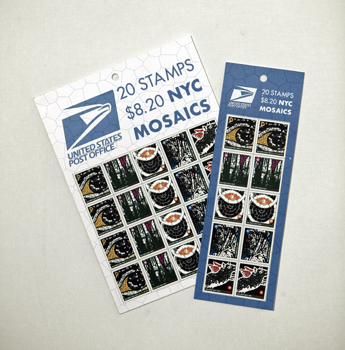
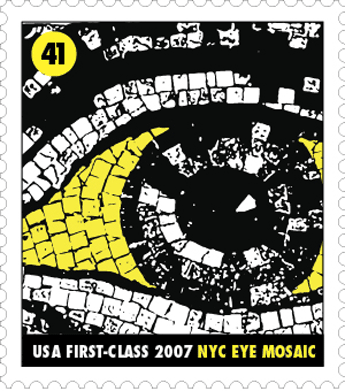
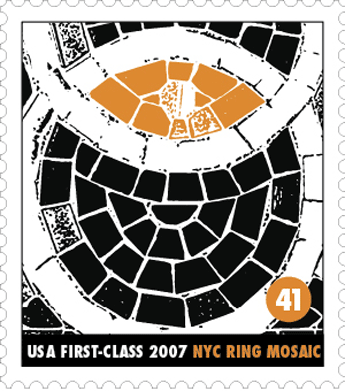
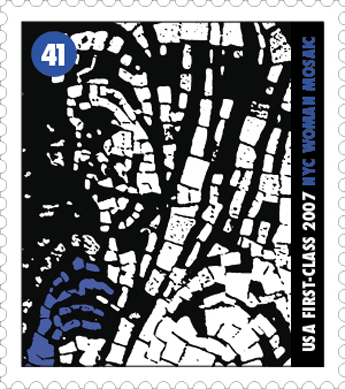
NYC Subway mosaics inspire a designer to create stamps


New York and its amazing subway mosaics were the source of inspiration for designer Mala Desai who created these for a packaging project while still a student.

Interesting find, don't you think?

Magda


  Mosaicology Blog
Contact  -  Facebook  -  Books  -  Shop  -  Advertise